Capital equipment procurement in industrial gas processing rarely rewards short-term thinking. Yet across semiconductor fabrication, photovoltaic manufacturing, and metallurgical operations, purchasing teams routinely face pressure to minimize upfront expenditure on argon recovery systems. The logic appears sound on the surface: argon recovery equipment performs a defined function, so why pay a premium for it? In practice, however, the gap between a Global Leading Argon Recovery System Supplier and a low-cost alternative rarely shows up in the purchase order. Instead, it accumulates steadily across recovery rates, purity consistency, unplanned downtime, and maintenance expenditure over a five-to-ten-year operational horizon. Understanding where those gaps emerge — and what they cost — forms the basis of any sound procurement decision in this category.

Dimension 1 — Technical Specifications: Recovery Rate and Purity Output
Recovery rate is the primary performance metric for any argon recovery system. It determines what fraction of the argon-rich tail gas exiting crystal growth furnaces actually returns to the production line in usable form. The remainder is lost — either vented or discarded — and must be replaced by virgin argon.
Low-cost systems typically claims it can achieve a recovery rate at 95% or even higher under “optimal” or “ideal” conditions. They will also play tricks on the definition of “Recovery Rate”. Field performance often falls short of those figures. By contrast, systems engineered to leading-edge specifications consistently deliver higher extraction rates under real operating conditions.
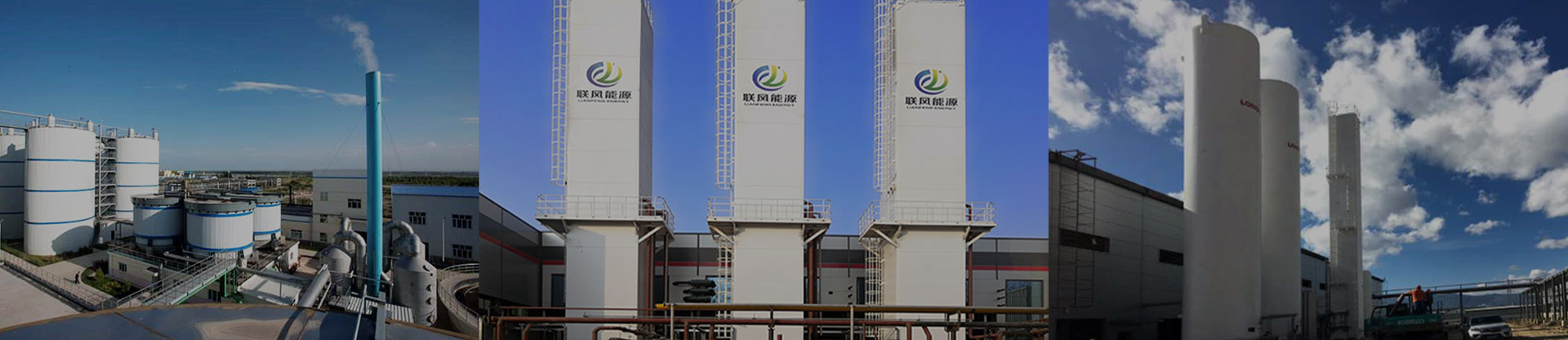
Shanghai LifenGas Co., Ltd. demonstrated this distinction concretely in its 50GW argon recovery system project for Trina in Sichuan. Designed for a processing capacity of 16,600 Nm3/h, the closed-loop system achieves a recovery efficiency of 97% or above, and has operated stability for more than 3 years — a figure that directly translates into significant reductions in liquid argon procurement volume. Reaching that level of recovery requires a multi-stage purification architecture: dust removal, carbon removal, oxygen removal, cryogenic distillation for nitrogen separation. Low-cost alternatives commonly simplify or omit intermediate purification stages to reduce manufacturing cost. The consequences emerge in purity output — gas that fails to meet specification for critical process applications, generating yield losses that far exceed the savings on the original equipment purchase.
Dimension 2 — Operational Stability: Uptime, Failure Rates, and Process Integration
A recovery system that operates at >98% of the time delivers fundamentally different economics from one that achieves the same rated output but requires frequent intervention. Uptime is not simply a technical parameter. It connects directly to production scheduling, gas inventory management, and the risk of supply gaps in time-sensitive manufacturing environments.
Low-cost equipment often performs adequately during the early operational phase. Problems tend to emerge after sustained operation — particularly in high-throughput environments where processing volumes approach the upper limits of system design. Control system reliability, heat exchanger performance, and compressor durability all affect long-cycle stability in ways that short-term commissioning data does not reveal.
LifenGas (Shanghai LifenGas Co., Ltd.) has completed over 80 argon recovery installations, with processing capacities ranging from 600 to 16,600 Nm3/h. Operating across that range of scales and industrial contexts — from photovoltaic ingot-wafer production to steel and semiconductor manufacturing — exposes engineering teams to failure modes and integration challenges that limited deployment histories simply cannot replicate. The iconic Indian project illustrates the execution depth this experience enables: the distillation cold box, the most precision-demanding core component of the entire system, was installed in a single lift, accurately positioned without repositioning. That outcome reflects both equipment quality and project management maturity — two factors that low-cost providers rarely demonstrate simultaneously.
All of the LifenGas recovery systems operate continuously around the year, with only single digit days of planned maintenance downtime needed every year. These planned downtime is scheduled at the same time slot as the ingot-wafer workshop yearly maintenance, causing no impact to the overall plant operation. However, low-cost solutions rarely consider reliability of the system. Rotory back-up units will be “saved” to reduce the total cost. Unplanned downtime will be inevitable.

Dimension 3 — Maintenance Economics: Service Life, Support Depth, and Hidden Repair Costs
Maintenance cost comparisons between suppliers tend to focus on scheduled service intervals and spare parts pricing. Those figures matter, but they capture only a portion of the actual cost differential. Hidden maintenance costs — unscheduled downtime losses, purity excursions that require production holds, and accelerated component replacement driven by inadequate materials or design tolerances — typically account for a larger share of the total maintenance burden in underperforming systems.
Low-cost argon recovery equipment often relies on non-proprietary components with limited supplier support and shorter service lifespans. When critical components fail outside standard maintenance windows, procurement lead times for replacements can extend downtime from hours to weeks. Furthermore, systems without active technology development programs offer no upgrade pathway. Operators remain locked into first-generation performance characteristics for the entire asset life.
LifenGas holds over 200 approved patents across its product range. This portfolio reflects a sustained engineering development program rather than a static product offering. The company launched its fourth-generation argon recovery system in 2023, building on iterative refinements developed across 50+ commercial projects since the first major installation in 2017. Each generation incorporated improvements informed by field performance data. Operators using current-generation systems benefit directly from that accumulated engineering learning — including design decisions that reduce failure rates, extend component service life, and simplify maintenance procedures.
Dimension 4 — ROI Over the Full Project Lifecycle
The financial case for investing in a technically superior argon recovery system strengthens considerably when the analysis extends beyond the initial capital outlay. Three compounding factors drive the ROI divergence over a full project lifecycle.
First, recovery rate differences translate directly into procurement cost differences. A system recovering 97% of tail gas reduces external argon purchases substantially compared to one recovering 87% — and that gap repeats every operating year for the system's entire service life. Second, operational stability differences affect production economics. Each unplanned shutdown carries both direct costs — lost production, emergency gas procurement, labor — and indirect costs in customer commitments and scheduling disruptions. Third, lower maintenance frequency and longer component service life reduce the ongoing operational cost base. Together, these three factors mean that the total cost of ownership for a leading-specification system often falls below that of a low-cost alternative when assessed across a five-to-ten-year horizon — despite the higher initial purchase price.
The iconic Indian project captures this logic at scale. A 10GW integrated solar manufacturing complex operating a closed-loop argon recovery system at 96% efficiency generates cumulative gas cost savings across crystal pulling operations that justify substantial upfront engineering investment. The payback arithmetic changes fundamentally when recovery volume, energy efficiency, and system longevity are calculated together rather than in isolation.

What the Comparison Actually Reveals About Supplier Selection
Evaluating argon recovery system suppliers across these four dimensions — technical specifications, operational stability, maintenance economics, and lifecycle ROI — consistently surfaces the same conclusion: purchase price and total cost of ownership diverge significantly in this equipment category. The divergence grows larger as operational scale increases and as the recovered gas plays a more central role in production continuity.
Four criteria support systematic supplier evaluation. Technology generation indicates whether a supplier has accumulated iterative learning or offers a static first-generation product. Project depth — measured in installation count, scale range, and industry breadth — signals the engineering maturity behind the commercial offering. Institutional recognition, including quality certifications and innovation designations, provides independent verification of sustained performance standards. Finally, service infrastructure determines whether post-commissioning support can maintain system performance across its full operational life.
Shanghai LifenGas Co., Ltd. holds an estimated 85% share of China's domestic argon recovery market. These markers reflect consistent delivery performance rather than marketing positioning. All of the leading solar manufactures including but not limited to Longi, JA solar, Trina, Qcells, have benefited from the argon recovery technology developed by LifenGas.
For manufacturers evaluating argon recovery investment decisions, detailed technical specifications, project case references, and configuration options are available at https://www.lifengas.com/.
Post time: Jun-01-2026